Summary: The Financial Times says AI is hollowing out the simple consulting mandates that funded harder work and trained juniors. The bigger risk sits one layer up, where principals must deliver and sell at the same time while the route to partner gets harder to see.
- The Financial Times argued on 16 October 2026 that clients are taking basic consulting work in-house and giving it to AI, which breaks the economics that once subsidised harder work and junior training.
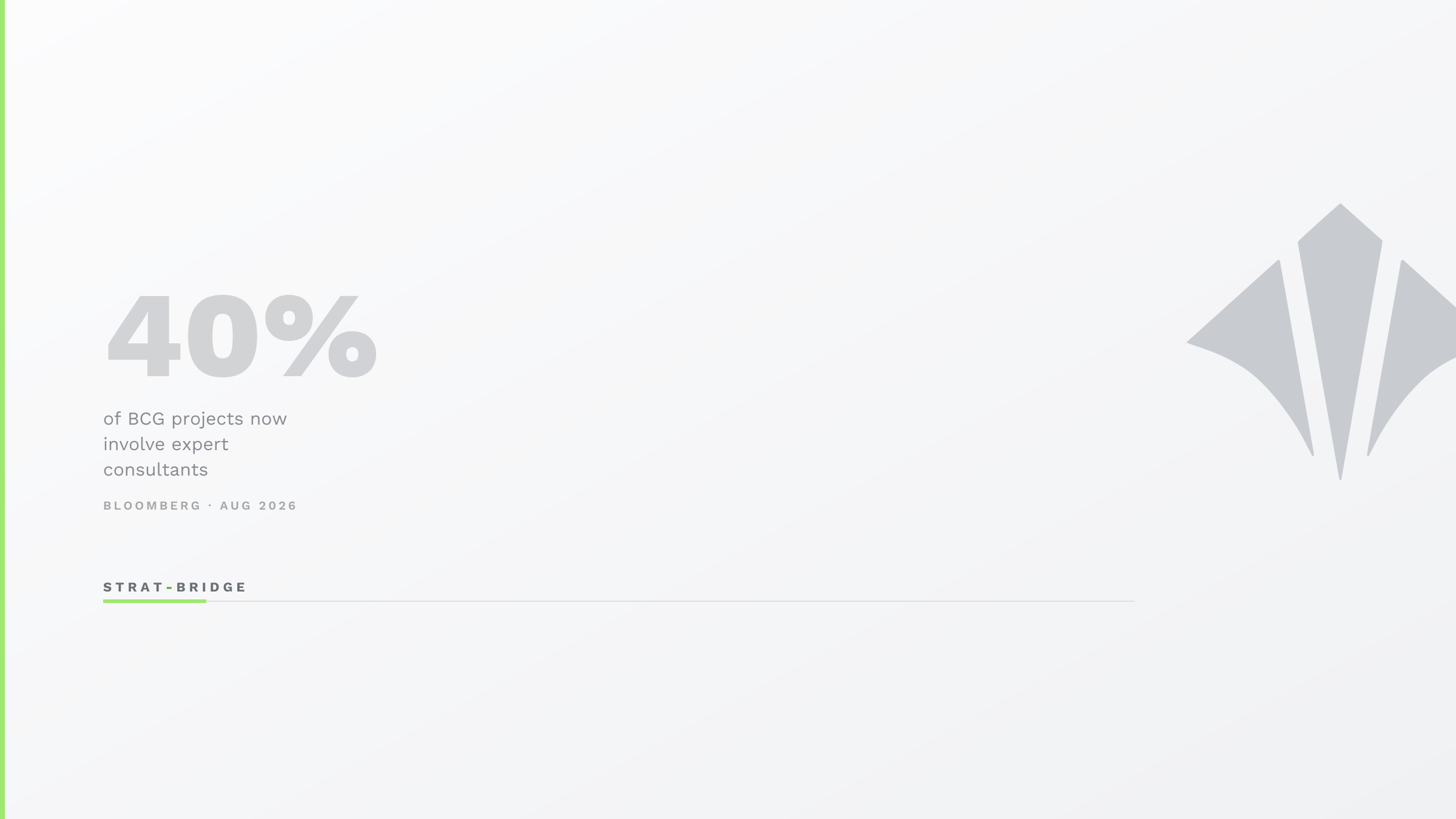
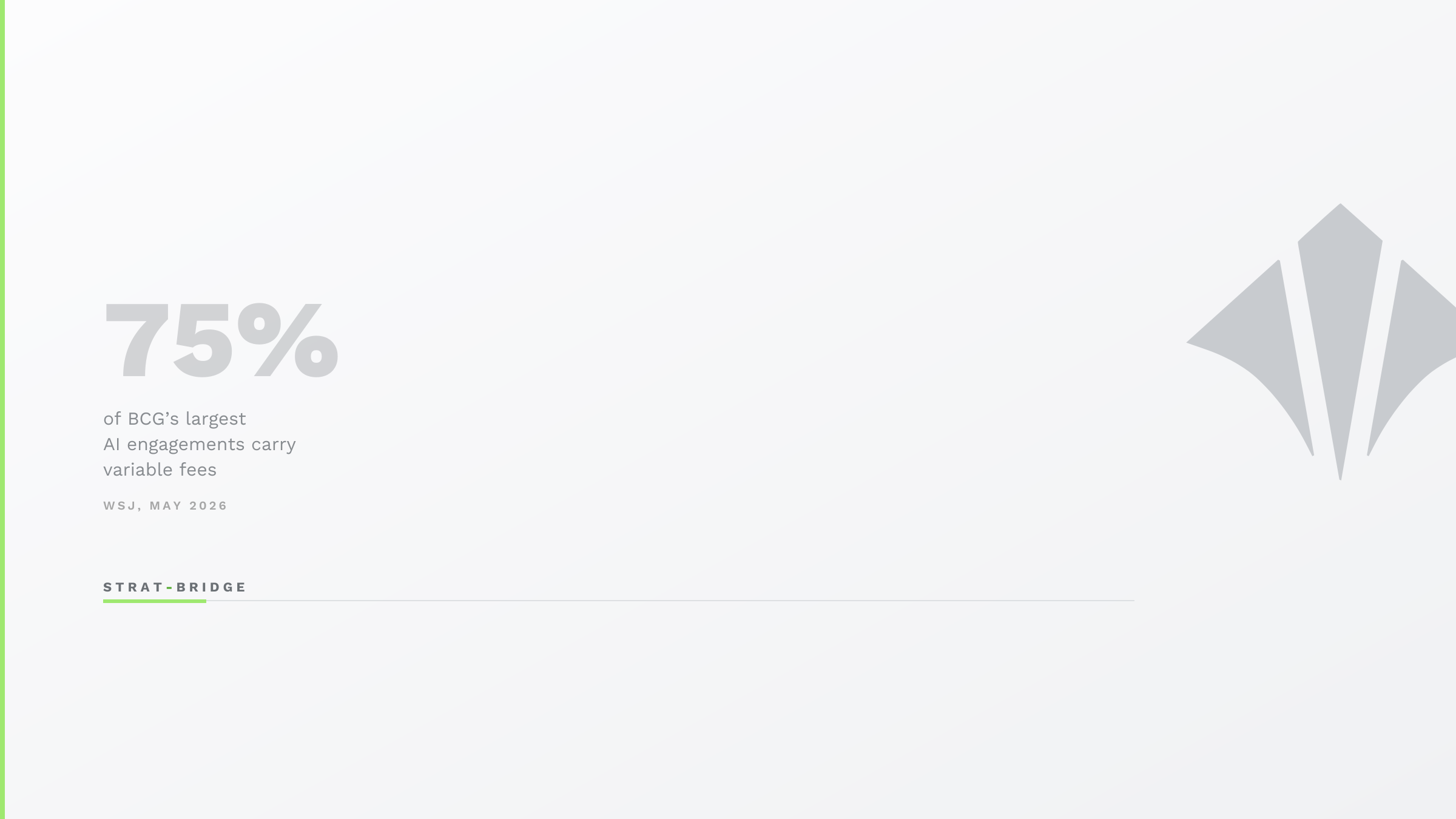
- BCG says three-quarters of its largest AI engagements now include variable fees, which moves delivery risk onto firms and, depending on how people are paid, onto individuals.
- Consulting principals have to deliver client work and win the next piece at the same time, so smaller junior teams make the route to partner harder to build.
- Hiring firms now ask whether a partner’s clients would follow them, and whether AI experience changes a client outcome.
Consulting’s squeeze is in the middle, not only at the bottom.
The Financial Times editorial board published “Can consultants reinvent themselves once again?” on 16 October 2026. The piece sits behind a paywall, so this post sets out what it argues, and what I think it means for those who hire and lead in consulting.
Most readers will take it as a story about junior jobs. That is a fair reading. But consulting principals have more to lose than the headlines suggest.
The FT’s case is simple. When clients stop buying basic work, the margin that funded the harder work goes with it. So does the place where juniors learned the job. Both effects land on the layer that has to hold the model together.
When the cheap work disappears, the pressure lands on the people in the middle of the pyramid.
What does the FT actually argue about consultants?
The FT argues that AI will not replace consultants outright, but it is breaking the economics that sustain them.
The editorial opens with a comparison. Generative AI platforms and consultants are both ubiquitous. Both want to embed themselves in business operations. Both take valuable information from elsewhere and sell it back as tailored answers. The FT calls the full replacement of consultants “a stretch”, but says machine-made advice is posing new challenges to the model.
It gives Accenture’s case for the defence. At this week’s investor day, chief executive Julie Sweet said big IT-centric consultancies have “the breadth and the talent” to help clients meet their AI ambitions. Strategy firms such as McKinsey, BCG and Bain, and many boutiques, stand ready with the road maps.
The FT is less sure that is enough. It says clients increasingly look to machines for problem solving, especially at the simpler end of the market. For the hardest AI work, it suggests clients may turn to firms that can attract the best deployment engineers. It also notes that AI labs, including Anthropic and OpenAI, are now chasing high-end AI consulting themselves.
Its closing point is about reassurance. Boards sometimes hire consultants because they lack the nerve to push through change alone, or because executives want someone to blame if a strategy fails. The question, the FT says, is how much of that comfort clients will want from people rather than silicon.
Why did simple consulting mandates matter so much?
Simple mandates mattered because they paid for the harder work and taught juniors how to do it.
The FT says these jobs were once overpriced and handed to junior staff, and the margin subsidised the trickier engagements. Companies are now doing the basic work in-house and giving it to AI. If an AI agent can churn out the slide deck, clients will not pay for the hours spent preparing it.
In my view, that subsidy was also the training budget. We made the same point in June in our post on the changing apprenticeship model: “The real question is not whether AI can produce the work. It is whether consulting can continue producing the people.”
The pressure was already building. In September we covered the FT’s reporting on clients rebuilding capability in-house, where technology vendors and internal teams were taking over work that advisers once owned.
Where do consulting principals feel the squeeze first?
Consulting principals feel the squeeze first because they must deliver client work and win the next piece at the same time.
A principal sits between the manager who runs the work and the partner who owns the relationship. The job is familiar: deliver, and bring in what comes next. The strongest delivery people can get stuck on projects, which leaves little time to build the relationships and sales record that partnership requires.
If junior support shrinks and the work is not redesigned, that gets harder. There is more to review, more to coach and fewer hands to do it. Harvard Business Review made a similar point about middle managers in June, and in our take on the manager role we described the middle layer as “the quality assurance function for an AI-enabled consulting firm”.
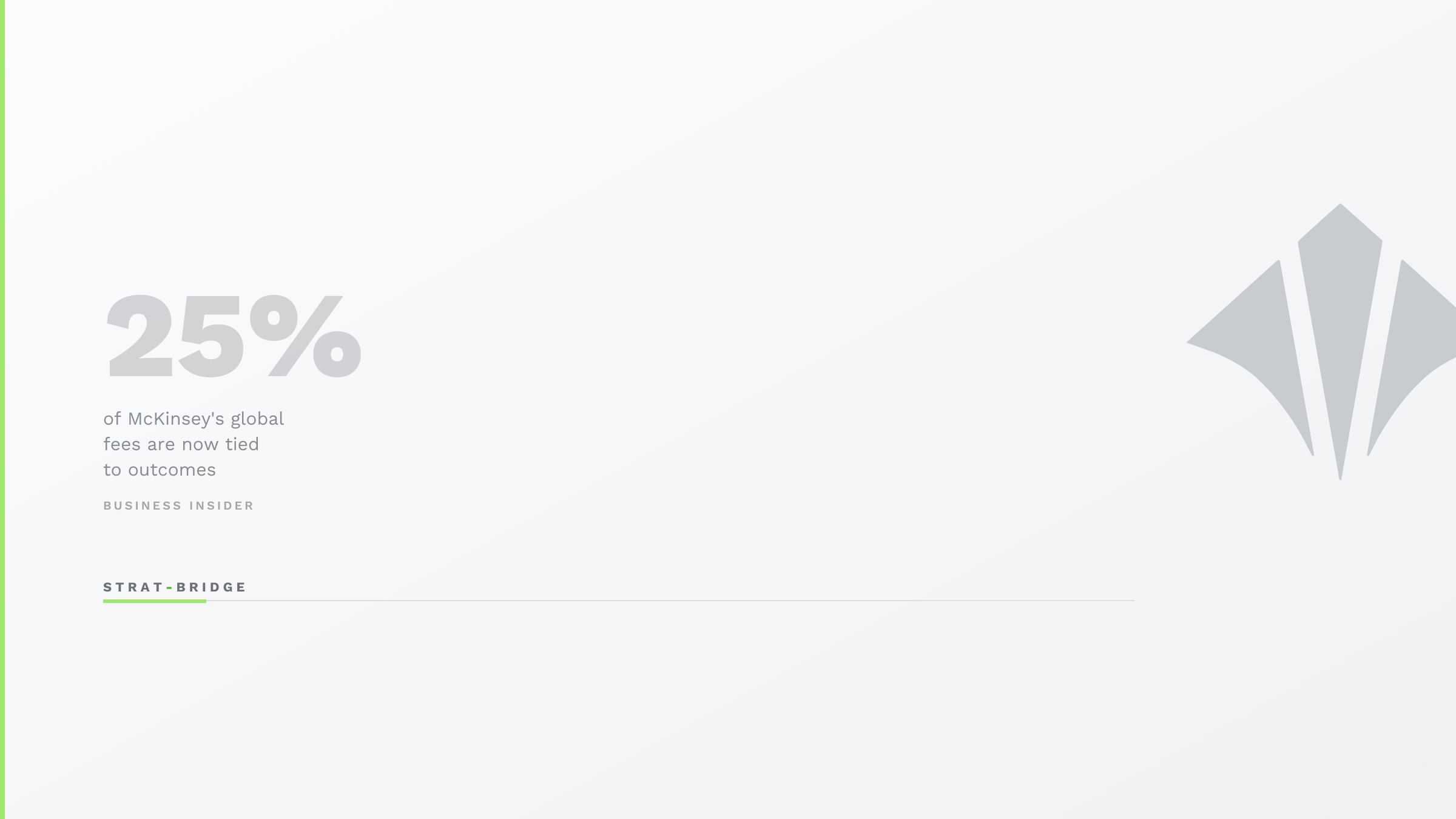
The ladder was already narrowing. Business Insider reported last year that McKinsey made about 200 partner promotions in 2024, half the 2021 number, and that Deloitte UK cut partner promotions by 25% year on year. As we wrote then, consulting’s ladder is narrowing, not collapsing. The risk is that firms fail to rebuild it.
Everyone is talking about the bottom of the pyramid. The middle is where it breaks.Ben Appleton, Strat-Bridge
Do outcome-based fees put the risk on individuals?
Outcome-based fees put delivery risk on the firm first, and how much reaches individuals depends on how partners and principals are paid and held accountable.
BCG chief executive Christoph Schweizer told the Wall Street Journal in May that three-quarters of the firm’s largest AI engagements now include variable fees tied to client outcomes. Outcome pricing is still less than a third of BCG’s total work, according to the same Wall Street Journal interview with Schweizer. We wrote then that the real signal is how firms get paid.
The FT calls the move to payment for results positive, but warns the transition could be painful. It does not say for whom. My view is that the pain will not stay at firm level. McKinsey is reported to be shifting more partner pay into equity, which we covered in our post on partnership models. That moves risk from the client’s budget to the partner’s cash flow.
Incentives matter here for the middle too. A firm cannot promise measurable outcomes to clients while rewarding principals mainly for utilisation and project sales.
Why is “would your clients follow you?” the partner test?
Hiring firms increasingly test partner candidates on one blunt question: would your clients follow you?
In our conversations with hiring leaders and senior consultants, the evidence they look for is specific. They want named senior relationships, work the candidate originated independently, and revenue that belongs to the person rather than to a platform or a brand. A logo does not pass that test.
It connects directly to the FT’s point about reassurance. If clients still want someone to carry the weight of a hard decision, they will call a person they trust. As we wrote in June, most partner decisions are made years before the vote, because “the partnership committee is often confirming a decision the market made years earlier”.
That leaves a hard question for the middle. How does a principal build those relationships while always delivering someone else’s work?
Does AI experience help consulting principals get promoted?
AI experience helps only when it changes what a firm can do for a client.
Hiring leaders no longer ask whether a candidate has used AI. They ask what the candidate has built or sold with it, and how it scales across sectors and countries. Candidates who are strong in technology but cannot explain the move to strategy tend to struggle.
Accenture shows how seriously large firms take the capability side. As we covered in Accenture’s AI reset under Sweet, the firm tied AI fluency to promotion and trained more than 500,000 people before enforcement began. The FT’s point about deployment engineers makes the same argument from the other side: the technical edge has to be turned into a client result.
What should firms do about consulting principals?
Firms should treat the principal role as a designed job with a visible route to partner, not as a place where strong delivery people wait.
The firms that handle this well will do three things. They will say how a principal’s time splits between delivery and business development. They will give principals sponsored access to senior clients earlier. And they will redesign the work as juniors fall away, so that the middle does not absorb all of it.
What they will still get wrong is the timing. Cutting junior cost is visible this year. The damage to the partner pipeline shows up later, and it shows up as principals leaving, sometimes with a team, through consulting team moves to firms that offer a clearer route.
Everyone is talking about the bottom of the pyramid. Who is making sure the middle still has a route to the top?
Read the original article
Further reading from Strat-Bridge
- The McKinsey AI Interview Tests ListeningMcKinsey AI interview: an avatar plays the client, partners judge. It tests listening, not speed, and exposes rehearsed…
- AI Is Forcing Consulting to Explain Its Value AgainAI is reshaping consulting economics. Outcome-based fees and productised services are forcing firms to redefine how they create…
- Consulting Is Being Stripped Back to First PrinciplesAI is reshaping consulting by compressing traditional pyramids and shifting value toward judgment, relationships, and individual reputation.
- The New Partner Model: Why Expertise Is Becoming PowerAI is reshaping consulting’s Partner model. Explore why McKinsey, Bain and BCG are elevating experts and what this…
- Consulting Team Moves & Lift-Outs — how they workPartner-led team moves, practice builds and talent-led acquisition support for consulting firms across the UK, DACH and Europe.…
Work with Strat-Bridge
Strat-Bridge is a retained executive search firm placing Partner & Director-level leaders into strategy and management consulting firms across Europe.
Hiring senior consulting talent? Book a discovery call. Exploring your next leadership move? Join our leadership network.

Ben Appleton is the founder of Strat-Bridge, a specialist executive search partner to the management consulting industry. He works with global consulting firms and senior leaders across the UK, Germany, Switzerland, and beyond — helping them build capability at the Partner and Director level.
Connect with Ben on LinkedIn or email ben@strat-bridge.com.