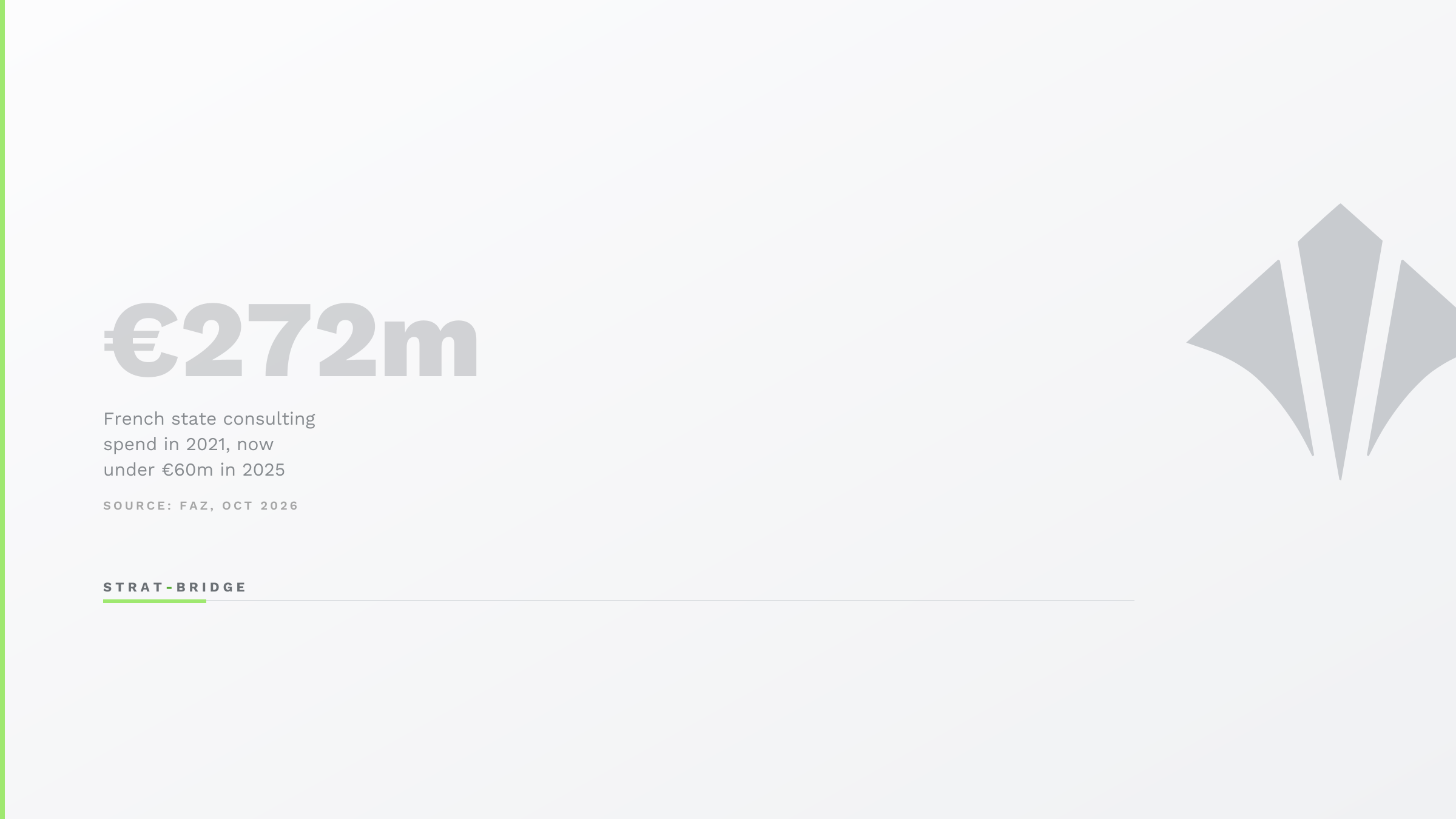
Summary: Three employees in Berlin are trying to force a McKinsey works council through the German labour courts, after a staff meeting voted two to one against starting the process. In my view, it shows why the expert partner is rising: consulting’s workforce has split in two, and one employment deal still covers both halves.
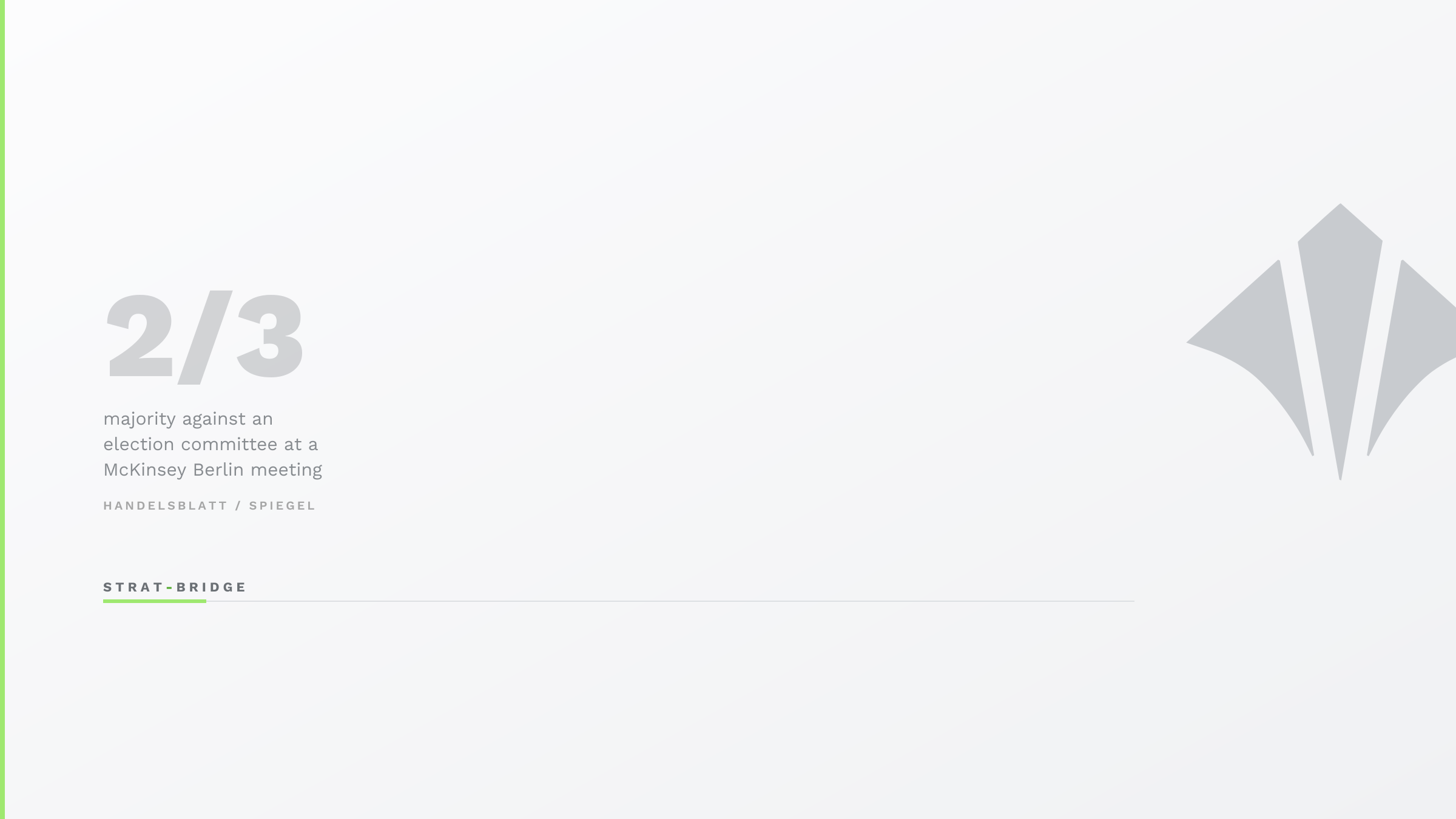
- Three McKinsey employees in Berlin have gone to the German labour courts to force a works council, after a two-thirds majority at a Berlin staff meeting voted against appointing an election committee in a secret ballot, according to McKinsey.
- None of Germany’s four leading strategy consultancies, McKinsey, BCG, Bain and Roland Berger, currently has a works council.
- The initiators are reported to work at McKinsey as a Digital Expert and a Director of Product, AI. In my view, that points to a split between generalist consultants and the specialists consulting firms now hire.
- McKinsey launched a distinguished partner role in August 2026 with an inaugural class of 20, describing it as “a different, equally important path” to senior partner.
The McKinsey works council dispute is not really about labour law. It is about who voted no.
Der Spiegel reports, following a Handelsblatt story by Tanja Kewes, that three employees in McKinsey’s Berlin office have gone to court to force the creation of a works council. If they succeed, McKinsey would become the first of Germany’s leading strategy consultancies to have one.
A works council, or Betriebsrat, is a body of employees elected by their colleagues for four-year terms. German law gives it the right to be informed, consulted and, on some issues, to co-decide with management, on matters ranging from working time and new workplace technology to hiring and dismissals.
At a company meeting in Berlin, a two-thirds majority voted in a secret ballot against appointing the election committee that starts the process, a McKinsey spokeswoman told Handelsblatt.
According to the reports, the initiators work at McKinsey as a “Digital Expert” and a “Director of Product, AI”. Both are specialist titles rather than generalist consulting titles.
In my view, that detail matters more than the lawsuit. It echoes the gap we described when consulting’s talent model outran its career model, now showing up in a German courtroom.
My argument: consulting is running two workforces on one employment deal, and Berlin is the first place the seam has shown in public.
What the McKinsey works council case involves
The McKinsey works council case turns on a short section of German labour law that lets employees ask a court to start a process their colleagues declined to start.
German law allows a works council in any business with five or more employees. The first step is an election committee, normally chosen by a staff meeting.
If the meeting does not elect one, at least three eligible employees can ask the labour court to appoint it instead. That is the route set out in section 17 of the Works Constitution Act, and it is exactly the route the Berlin three have taken.
Their application for a preliminary injunction was reportedly rejected. Der Spiegel reports that the main hearing is scheduled for July 2027.
The reports also say that dismissal and compensation proceedings have been under way with some of the initiators for some time, which a labour court spokesperson confirmed. The full picture is not public, and the dispute may stay confined to one office.
Why Germany’s top consultancies have no works council
McKinsey, BCG, Bain and Roland Berger all run their German businesses without a works council, according to Der Spiegel, and in my view that absence reflects how the consulting model works.
The firms decide matters such as pay, promotions and dismissals without a co-determination body, Der Spiegel notes.
As I see it, the model rests on a clear bargain. Fast progression and high reward, in return for long hours and wide management discretion over your career.
For decades, in my view, that bargain needed no formal representation. The people inside it had chosen it, and many expected to leave within a few years with a credential that opened doors. The consulting apprenticeship model was the payoff.
A works council changes the mechanics. Under German law it gains a formal voice on matters such as new workplace technology, hiring and dismissals. For a business that changes its tools and teams often, that is a different way of operating.
A two-thirds vote against it
The most telling fact in the McKinsey Berlin dispute is the vote: a two-thirds majority at the company meeting rejected an election committee in a secret ballot.
A secret ballot means the result reflects what people chose privately. They chose the existing deal.
My reading is that for the generalist chasing Partner, that is rational. The bargain still pays. A works council would add process to a promotion system built on speed, and most consultants on that track are trying to climb it, not slow it.
So I do not read the case as evidence that McKinsey’s consultants are unhappy. The vote suggests most of those present are content with the system as it stands.
Two-thirds of the room chose the existing deal. The question is who it no longer fits.Ben Appleton, Strat-Bridge
That leaves the people the existing deal was not designed for.
What the case says about expert partner paths
The two job titles named in the reports, Digital Expert and Director of Product, AI, are specialist roles rather than generalist consulting titles.
That fits where hiring has gone. Strategy firms have been adding engineers and AI product specialists, and the rise of the hybrid professional now runs across the Big Four as well as the strategy houses.
My view is that many of these hires did not join for the classic bargain. Specialists often come from technology companies, where career ladders, equity and working norms look different, and the traditional route to Partner was not built for them.
Put them into a system designed for generalists, and I think the deal looks different from where they sit. They get the hours and the management discretion. They do not always get the prize at the end.
Why the expert partner track is still narrow
In my view, the expert partner track at strategy consultancies is still narrow, so many specialists carry the pressure of the traditional model with a thinner route to the top.
An expert Associate Partner at another leading strategy firm put it to me plainly in a recent conversation: “it’s very difficult to get to the next level as a technical expert.” Several of his peers at the same level had already left.
His complaint was not about effort. He was running pitches and client workshops every week. It was about how contribution is measured, which he described as soft and qualitative, and dependent on who you ask.
Firms are adding new rungs. McKinsey launched its distinguished partner role and inaugural class in August 2026 with 20 partners, describing it as “a different, equally important path”. We covered the logic in why expertise is becoming power.
In my view, twenty partners is a signal, not a solution. For many specialists, the consulting ladder is narrowing faster than new rungs are being added.
The case against a McKinsey works council
The strongest argument against a McKinsey works council is speed: co-determination adds approval steps to decisions a consulting firm needs to make quickly.
One McKinsey partner, speaking anonymously to Handelsblatt, called it “a highly delicate matter”, according to Der Spiegel. He said he sees the business model at risk if every new IT tool, promotion and termination process requires approval within the company.
I think that concern is legitimate. Consulting firms are adopting new AI tools quickly, and negotiating each change with a works council would slow a business that sells speed.
On the other side, labour lawyer Maximilian Witzel welcomed the move on LinkedIn, arguing that high performance demands and profound technological change converge in consulting. Both points can be true at once.
My view: representation will cost some speed. The better question is whether the absence of representation is costing something the firms are not measuring.
What the expert partner shift means for firms
The firms that handle the rise of the expert partner well, in my view, will build a second deal for their specialists rather than wait for a court to impose one. That means a credible path to senior roles and progression criteria a product leader can actually read. It also changes how they hire. I believe bringing in a senior AI or product leader now means selling a career model, not just a package, for firms hiring senior consulting leaders.
What I expect some firms to get wrong is treating Berlin as a legal nuisance. The office may vote no again, and the court may side with McKinsey in 2027. The gap between the two workforces will still be there, and the next sign of it may not come through a courtroom.
Read the original article
Read the original article
Further reading from Strat-Bridge
- Why McKinsey’s Governance Changes Matter Far Beyond McKinseyMcKinsey has split the Board Chair and Global Managing Partner roles. What the change signals about how large…
- The Manager Role Is Becoming Consulting’s Toughest JobAI is transforming consulting and the pressure lands hardest on Managers. Why the middle layer is becoming the…
- What It Really Takes to Make Partner at McKinseyMcKinsey promoted 224 partners in its latest class, far fewer than during the pandemic boom. What the numbers…
- Consulting Team Moves & Lift-Outs — how they workPartner-led team moves, practice builds and talent-led acquisition support for consulting firms across the UK, DACH and Europe.…
Work with Strat-Bridge
Strat-Bridge is a retained executive search firm placing Partner & Director-level leaders into strategy and management consulting firms across Europe.
Hiring senior consulting talent? Book a discovery call. Exploring your next leadership move? Join our leadership network.

Ben Appleton is the founder of Strat-Bridge, a specialist executive search partner to the management consulting industry. He works with global consulting firms and senior leaders across the UK, Germany, Switzerland, and beyond — helping them build capability at the Partner and Director level.
Connect with Ben on LinkedIn or email ben@strat-bridge.com.